


General & Preventive Dentistry
Jaw Pain & TMJ Treatment in Woodland Hills, CA
Jaw pain, clicking, and persistent headaches are not symptoms to push through. If you have been dealing with discomfort in or around your jaw joint, TMJ treatment in Woodland Hills at First Dental Implant Center gives you a clear path to diagnosis and relief. Dr. Kass Nourishad evaluates each patient individually — no generic protocols — and PPO insurance is accepted. Appointments run Monday through Thursday until 6 PM, so accessing care does not require rearranging your day.
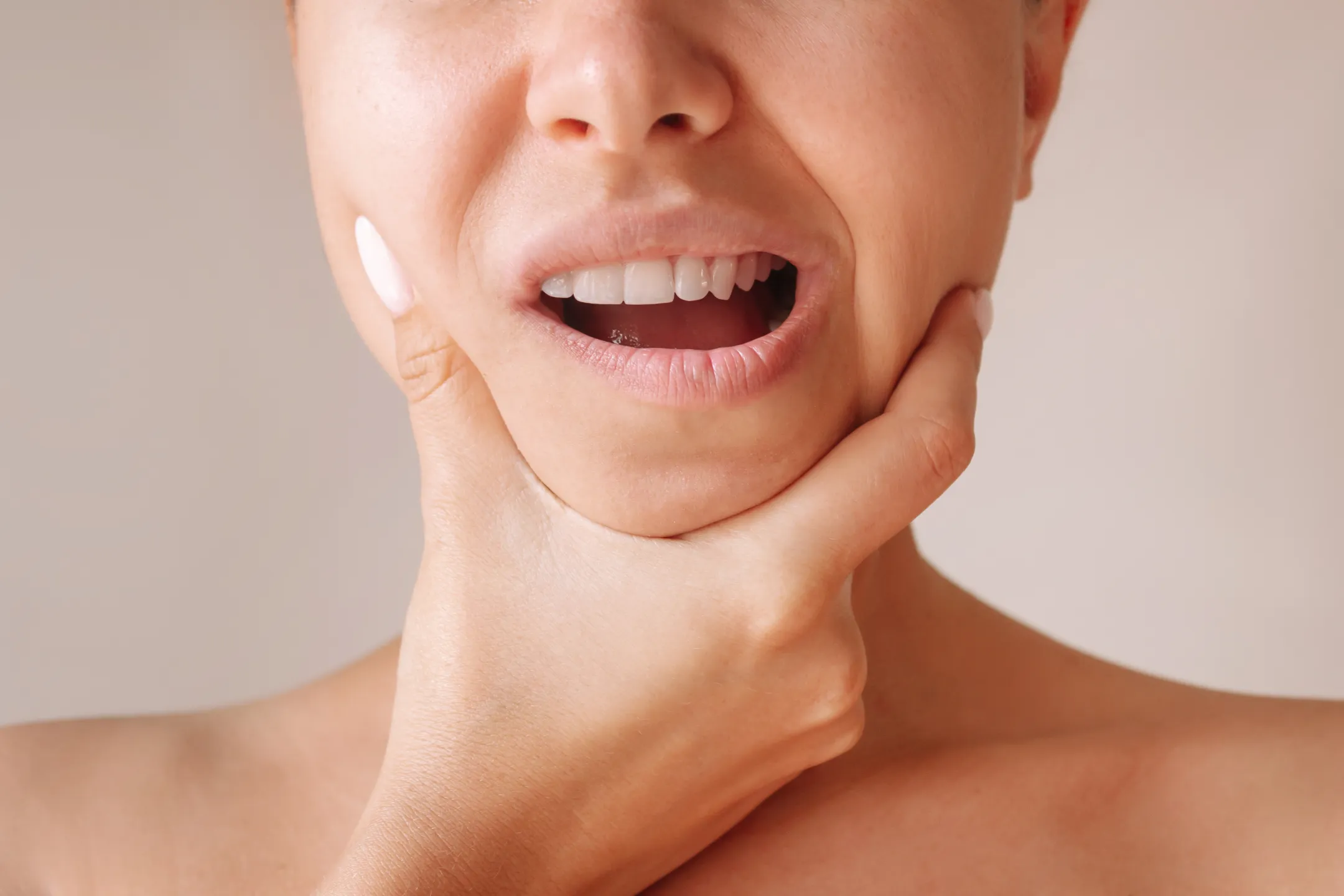
What Is TMJ Disorder?
The temporomandibular joint (TMJ) connects your lower jaw to the base of your skull on each side of your face. It handles every chewing, speaking, and swallowing motion you make — which means when it is not functioning correctly, the effects reach well beyond your jaw. TMJ disorder is a broad term for dysfunction affecting this joint, the surrounding muscles, or both. It is one of the more commonly misdiagnosed pain conditions because its symptoms often appear far from the source.
This page is part of our General & Preventive Dentistry services at First Dental Implant Center.
Common Symptoms of TMJ Dysfunction
Patients with TMJ disorder typically describe one or more of the following:
- Jaw pain or soreness, especially in the morning
- Clicking, popping, or grinding sounds when opening or closing the mouth
- Limited jaw movement or a jaw that locks briefly
- Headaches or migraines, particularly at the temples
- Ear pain or a sensation of fullness in the ears
- Facial muscle fatigue or tightness
- Neck and shoulder tension
Not every patient experiences all of these symptoms, and severity can range from mild and intermittent to constant and disabling.
What Causes TMJ Problems — Including Bruxism
TMJ disorder rarely has a single cause. Common contributing factors include:
- Bruxism — grinding or clenching the teeth, often during sleep, which places sustained compressive force on the joint
- Bite misalignment — when the upper and lower teeth do not meet evenly, the joint compensates in ways that create strain over time
- Joint injury or trauma — a direct impact to the jaw or a whiplash event can displace the joint disc
- Arthritis — degenerative or inflammatory joint conditions that affect the TMJ directly
- Stress — elevated muscle tension from psychological stress is a well-documented trigger for both bruxism and TMJ flare-ups
Bruxism treatment in Woodland Hills is frequently part of a broader TMJ care plan, because grinding is both a cause and an accelerant of joint damage. Addressing one without the other produces incomplete results.
How We Evaluate and Treat TMJ in Woodland Hills
Dr. Kass Nourishad begins with a thorough clinical evaluation — assessing jaw range of motion, joint sounds, bite alignment, and muscle tenderness. Imaging may be used to assess the joint structure when indicated. From there, a care plan is built around what is actually driving your symptoms, not a one-size-fits-all recommendation.
Treatment may include occlusal therapy to correct bite imbalances, muscle relaxation protocols, or referral for adjunctive care when the joint requires additional intervention. The goal is measurable reduction in pain and restored jaw function — not symptom management that masks the problem.
If you are experiencing acute jaw pain that has come on suddenly or is significantly limiting your ability to eat or speak, same-day emergency appointments may be available.
TMJ disorder and sleep apnea also frequently co-occur, as jaw position and airway function are anatomically connected. If you have symptoms of both conditions, Dr. Kass can evaluate whether a combined approach is appropriate.
TMJ Treatment vs. Occlusal Guards — Which Do You Need?
An occlusal guard is a custom-fitted appliance worn over the teeth to reduce the mechanical load on the TMJ and protect tooth surfaces from grinding damage. For patients whose primary issue is bruxism without significant joint involvement, a well-fitted guard may be sufficient.
However, a guard does not correct bite misalignment, reduce joint inflammation, or address disc displacement. Patients with confirmed TMJ disorder — particularly those with limited jaw movement, joint locking, or significant pain — typically need a more comprehensive evaluation before a guard is prescribed. In many cases, the two approaches work together: a guard manages the grinding load while other interventions address the joint directly. Dr. Kass will tell you clearly which applies to your situation and why.
Why Patients Choose Dr. Kass for Jaw Pain Relief
Patients searching for TMJ disorder treatment near me often arrive after months of being told their pain is stress-related or referred elsewhere without a clear answer. Dr. Kass Nourishad takes a different approach: precise evaluation, an honest assessment of what is driving the problem, and a care plan that reflects your specific anatomy and history — not a default protocol.
With over 30 years of clinical experience and extended weekday hours through 6 PM Monday through Thursday, First Dental Implant Center is built for patients who need expert care on a realistic schedule. PPO insurance is accepted, and our team can help you understand your coverage before treatment begins. See our Insurance & Financing page for a full list of accepted plans and financing options.
What Happens If TMJ Disorder Goes Untreated?
Consequences of Ignoring Jaw Pain
TMJ disorder does not typically resolve on its own, and delayed care allows the underlying damage to progress. Over time, untreated TMJ dysfunction can lead to:
- Permanent joint damage — disc displacement and cartilage wear that becomes increasingly difficult to reverse
- Worsening tooth damage — bruxism-related grinding erodes enamel and can fracture teeth, creating costly restorative needs
- Chronic headaches and facial pain — what begins as intermittent discomfort often becomes a daily pattern
- Sleep disruption — jaw clenching and associated muscle tension frequently interfere with sleep quality
- Reduced jaw function — progressive limitation in how wide you can open your mouth affects eating, speaking, and quality of life
Early intervention produces better outcomes. If your symptoms have been present for weeks or months, this is the right time to have them evaluated.
Questions
Frequently Asked Questions
Lorem ipsum dolor sit amet, consectetur adipiscing elit. Suspendisse varius enim in eros elementum tristique. Duis cursus, mi quis viverra ornare, eros dolor interdum nulla, ut commodo diam libero vitae erat. Aenean faucibus nibh et justo cursus id rutrum lorem imperdiet. Nunc ut sem vitae risus tristique posuere.
Is TMJ treatment covered by PPO insurance?
Many PPO insurance plans provide at least partial coverage for TMJ evaluation and certain treatments. First Dental Implant Center accepts a wide range of PPO plans, including Delta Dental, Cigna, Aetna, MetLife, and others. Coverage varies by plan and diagnosis, so we recommend verifying your specific benefits before your appointment. Visit our Insurance & Financing page for more detail on accepted carriers.
How is TMJ different from bruxism?
TMJ disorder refers to dysfunction of the temporomandibular joint itself — the hinge connecting your jaw to your skull. Bruxism is the habit of grinding or clenching your teeth, often during sleep. The two conditions frequently occur together: chronic bruxism places sustained pressure on the TMJ and is one of the most common drivers of TMJ disorder. Treating one without addressing the other often produces incomplete results.
Do I need a mouth guard or TMJ treatment — or both?
An occlusal guard can reduce the mechanical load on your jaw joint and protect your teeth from grinding damage, but it does not resolve underlying joint dysfunction on its own. Some patients benefit from a guard alone; others need a more comprehensive approach that addresses bite alignment, muscle tension, or joint inflammation. Dr. Kass evaluates each patient individually to determine the right course of care.
How long does TMJ treatment take to work?
Many patients notice meaningful symptom relief within a few weeks of beginning treatment, though timelines vary depending on the severity of joint involvement and whether contributing factors like bruxism are also being managed. More complex cases may require several months of consistent care. Dr. Kass sets clear expectations at your evaluation so you understand what to expect and when.
Begin
Stop Pushing Through the Jaw Pain
If you've been living with jaw pain, clicking, or chronic headaches, you deserve a clear diagnosis and a plan that addresses the cause. Schedule an evaluation with Dr. Kass Nourishad — precise assessment, honest answers, and treatment built around your anatomy. PPO insurance is accepted and extended weekday hours make care easy to access. Call (888) 213-0009 to get started.