


Cosmetic Dentistry
Dental Bonding in Woodland Hills, CA — Same-Day Results
A chipped tooth or uneven smile doesn't always require a major procedure to fix. Dental bonding in Woodland Hills at First Dental Implant Center is one of the most efficient cosmetic corrections available — completed in a single visit, with no lab wait and no permanent alteration to your tooth structure. Dr. Kass Nourishad brings the same precision he applies to complex restorative cases to every bonding treatment, so the result looks intentional rather than patched. PPO insurance is accepted, and appointments are available Monday through Thursday until 6 PM — two practical reasons patients searching for tooth bonding near me in Los Angeles choose this practice over a general dental office.
What Is Dental Bonding and Who Is It For?
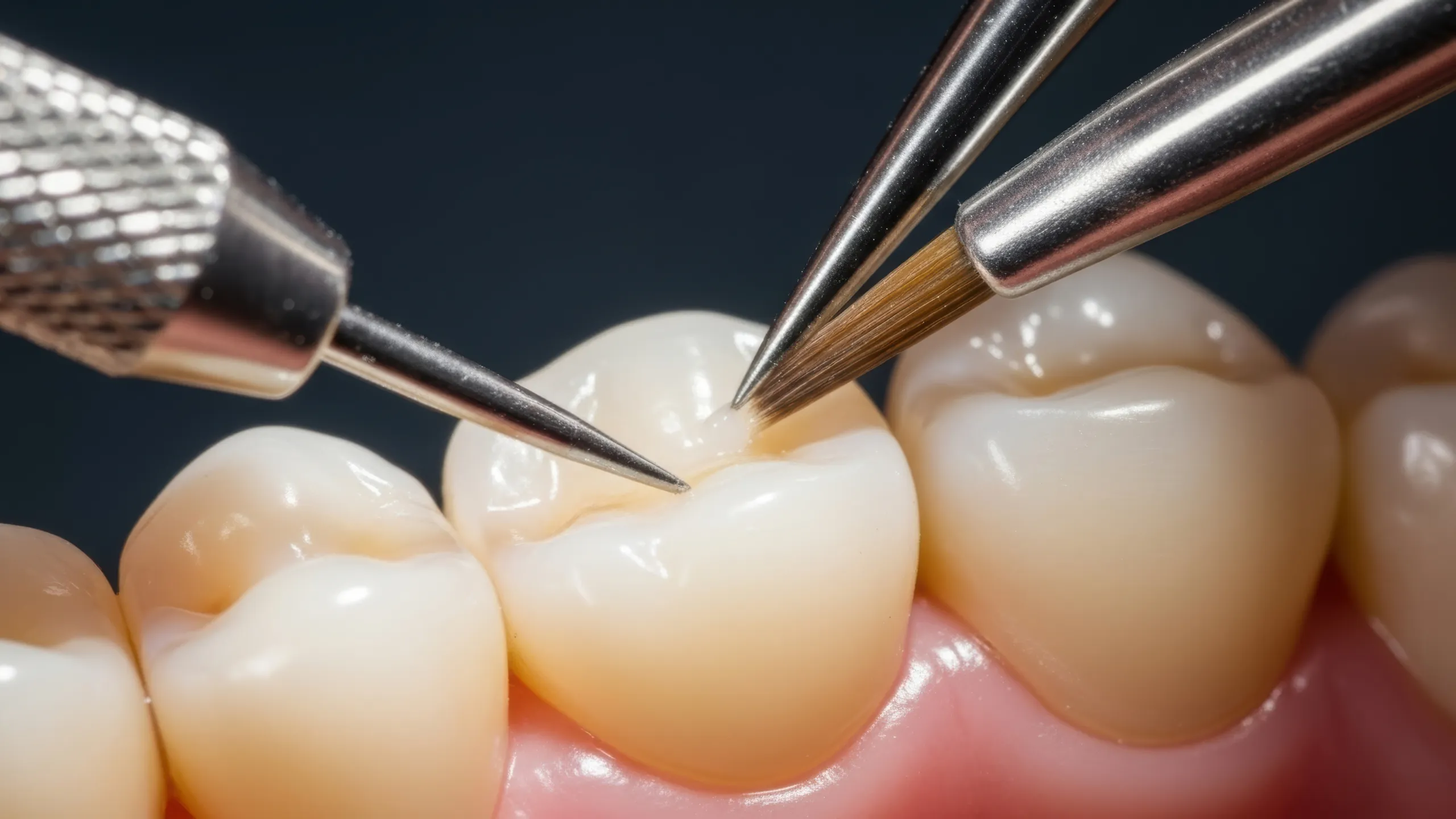
Composite bonding uses a tooth-colored resin that is applied directly to the tooth surface, shaped by hand, and hardened with a curing light. No impressions. No lab. No temporary restorations. The material bonds to enamel and can be sculpted to match the surrounding tooth in color, translucency, and contour.
It is a good fit for patients with minor cosmetic concerns on otherwise healthy teeth — particularly those who want a visible improvement without committing to a more involved procedure.
Common Problems Composite Bonding Corrects
- Chipped or cracked front teeth
- Small gaps between teeth
- Discoloration that does not respond to whitening
- Slightly uneven tooth length or shape
- Exposed root surfaces causing sensitivity
Is Bonding a Permanent Fix? What Patients Should Know
Bonding is not permanent. The composite resin can chip or stain over time and may need to be refreshed or replaced after several years. That said, it is also fully reversible — no enamel is removed during placement, which means your options remain open. For patients who want a longer-lasting or more comprehensive result, Dr. Kass may recommend exploring porcelain veneers as a next step.
Benefits of Tooth Bonding at First Dental Implant Center
What separates composite bonding in Woodland Hills at this practice from what a general dentist offers is the clinical eye behind the result. Dr. Kass evaluates proportion, color, and how the bonded tooth interacts with surrounding teeth and the patient's bite — details that determine whether a repair looks seamless or obvious.
Same-Day Treatment, No Lab Wait
Because composite resin is applied and shaped chairside, there is no fabrication delay. Most bonding appointments are completed in under an hour per tooth. Patients leave with a finished result the same day they come in.
PPO Insurance Accepted — and Cost Transparency Up Front
First Dental Implant Center accepts most major PPO insurance plans. Before any treatment begins, the team reviews your coverage so you understand what is included and what, if anything, falls outside your plan. See the Insurance & Financing page for a full list of accepted carriers and financing options.
Dental Bonding vs. Teeth Whitening — Which Is Right for You?
Both procedures address tooth appearance, but they work differently and target different problems. Understanding the distinction helps you choose the right starting point — or determine whether a combination approach makes sense.
When Bonding Outperforms Whitening
Whitening agents work on natural enamel — they cannot change the color of existing composite, crowns, or veneers, and they are not effective on intrinsic staining caused by trauma, certain medications, or developmental factors. If your discoloration falls into any of these categories, bonding is the more targeted correction. It also addresses structural concerns — chips, gaps, and shape — that whitening cannot touch.
When Whitening Is the Better First Step
If your teeth are structurally sound and the concern is surface staining from food, coffee, or tobacco, teeth whitening may be the simpler and more cost-effective first step. Whitening before bonding also ensures the resin is color-matched to your brightest baseline, producing a more consistent final appearance across all teeth.
What Happens If You Leave a Chipped or Discolored Tooth Untreated?
A minor chip rarely stays minor. Uneven enamel edges can catch and expand with normal bite pressure, turning a small cosmetic issue into a structural one that may eventually require a crown or more involved restoration. Discolored teeth that result from internal changes — rather than surface staining — can also signal underlying conditions worth evaluating. Addressing the concern early, when bonding is still a viable option, is typically faster, less invasive, and less costly than waiting.
Dental Bonding Cost in Los Angeles — What to Expect
Dental bonding cost in Los Angeles varies based on the number of teeth treated, the complexity of the repair, and your insurance coverage. First Dental Implant Center does not quote pricing without a clinical evaluation, because the scope of work directly affects the estimate. What patients can expect: a clear cost breakdown before any treatment begins, PPO benefits applied where applicable, and access to financing through CareCredit, Cherry, and Lending Club if needed. For patients with more extensive cosmetic goals across multiple teeth, a smile makeover consultation may be a more efficient path. Learn more about coverage and payment options on the Insurance & Financing page.
Patients exploring their full range of cosmetic dentistry options are welcome to discuss bonding alongside other treatments during the same visit.
Questions
Frequently Asked Questions
Lorem ipsum dolor sit amet, consectetur adipiscing elit. Suspendisse varius enim in eros elementum tristique. Duis cursus, mi quis viverra ornare, eros dolor interdum nulla, ut commodo diam libero vitae erat. Aenean faucibus nibh et justo cursus id rutrum lorem imperdiet. Nunc ut sem vitae risus tristique posuere.
How long does dental bonding last?
Composite bonding typically lasts between 5 and 10 years depending on the location of the tooth, bite forces, and how well the surface is maintained. Avoiding habits like biting nails or chewing on hard objects helps extend the lifespan. Dr. Kass will assess your bite and tooth position to give you a realistic expectation before treatment begins.
Does bonding work on front teeth?
Yes — front teeth are the most common application for dental bonding. The composite resin can be color-matched precisely to surrounding enamel, making it well-suited for visible chips, gaps, or discoloration on incisors and canines. Results are typically immediate and noticeable.
Can bonding be done in one visit?
In most cases, yes. Composite bonding does not require lab fabrication, so the entire process — shaping, applying, and curing the resin — is completed chairside in a single appointment. No temporary restorations or return visits are needed for straightforward cases.
Does insurance cover tooth bonding?
Coverage depends on your specific PPO plan and the reason for treatment. Bonding performed to repair a chipped or fractured tooth is more likely to receive partial coverage than purely cosmetic applications. First Dental Implant Center accepts most PPO insurance plans and can help you understand your benefits before your appointment.
Begin
Ready to Restore Your Smile in a Single Visit?
If a chip, gap, or stubborn stain is keeping you from smiling freely, dental bonding may be the quickest way to fix it — often in under an hour, with no lab wait and no permanent change to your tooth. Dr. Kass will evaluate your teeth, confirm whether bonding is the right approach, and verify your PPO benefits before anything begins. Schedule your consultation today and leave with a result you can see the same day.